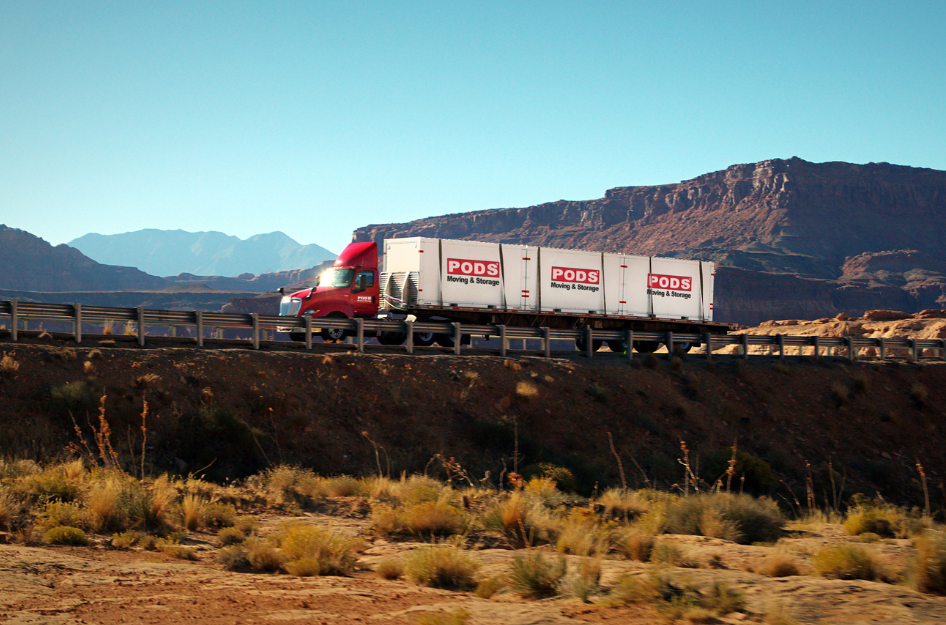
Cross-Country Moving Costs, Explained: Answers to Your Most Frequently Asked Questions
Long-Distance Moves

If you’re thinking about long-distance moving, one of the first questions you’re likely to ask is, “How much does it cost to move cross-country?” And we know that before you start spending precious time getting quotes and giving out your email address or phone number, you just want a basic idea of how much cross-country movers cost, so you know how much to budget. Is that too much to ask? Not at all. And that’s exactly what this guide for cross-country moving costs is all about.
Our guide will give you estimated moving cross-country costs for three types of moves: The 2,800-mile trek between coasts, relocating the 1,000 miles or so between the Northeast and Florida, and moving 100 to 500 miles to a nearby city or state. We’ll cover the factors that affect long-distance and cross-country moving costs. And finally, we’ll arm you with knowledge of what to expect with the three major modes of moving: Traditional full-service movers, rental trucks, and moving and storage containers, like PODS.
Before we start, though, there’s one major caveat: These ballpark moving estimates can’t substitute for vetting movers yourself and getting direct quotes. Sorry, you can’t skip that step. But our cross-country moving costs guide can save you time in the planning stage with valuable guidelines, so you can avoid being taken for a ride when you’re moving cross-country. Now let’s get to it.
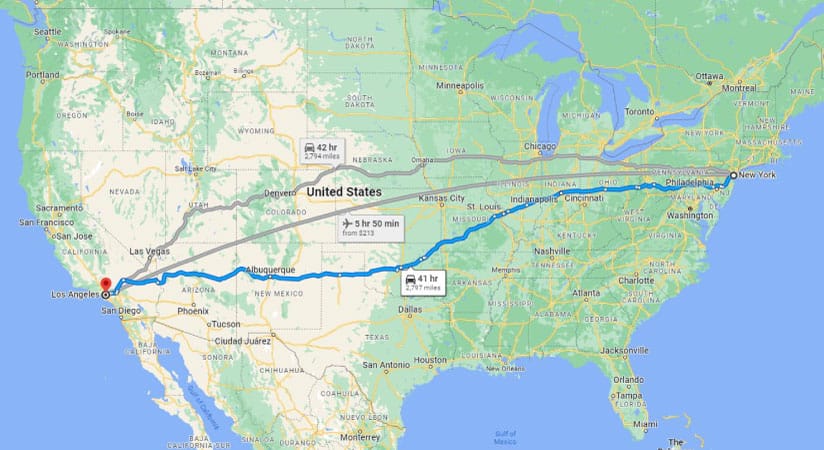
Cross-country moving costs vary depending on what kind of move you choose.
(Source: Google Maps)
Cross-Country Moving Costs Example: Los Angeles to NYC
How much does it cost to move cross-country in a rental truck? The cost to move a three-bedroom home from Los Angeles to NYC with a rental truck averages around $2,600, but that depends on the truck’s size and your precise location — and that doesn’t include fuel costs, which can fluctuate quite a bit. The same move averages around $4,000 for a portable moving container. And a full-service move averages about $6,700. (These moving cross-country costs represent the average between the low and high range for each option.)
Here’s a table for easy reference for NYC to L.A. and other popular cross-country moves between the East and West Coasts. You’ll see that the average cost of moving cross-country is unique to each geographic area.
| Start your long-distance move on the right foot and minimize expenses with this handy moving checklist from PODS. |
How Much Does It Cost To Move Cross-Country From the East to the West Coast?
The average cost to move cross-country will be between $3,100 and $7,300, depending on which option you choose — the DIY approach, full-service movers, or a container service like PODS.
Moving Costs From East Coast to West Coast*
NYC to L.A.
- Miles: 2,790
- PODS (includes transport and 1-month storage): $2,987 - $4,579
- Full-Service Movers (includes transport and loading/unloading): $4,467 – $9,055
- Rental Truck (plus fuel costs): $2,058 – $4,387
NYC to San Francisco
- Miles: 2,900
- PODS (includes transport and 1-month storage): $3,245 - $4,976
- Full-Service Movers (includes transport and loading/unloading): $4,688 – $8,954
- Rental Truck (plus fuel costs): $2,206 – $4,797
Miami to L.A.
- Miles: 2,730
- PODS (includes transport and 1-month storage): $3,661 - $5,613
- Full-Service Movers (includes transport and loading/unloading): $4,231 – $8,258
- Rental Truck (plus fuel costs): $2,087 – $4,315
Miami to San Francisco
- Miles: 3,050
- PODS (includes transport and 1-month storage): $4,208 - $6,612
- Full-Service Movers (includes transport and loading/unloading): $4,723 – $9,577
- Rental Truck (plus fuel costs): $2,274 – $4,948
*Based on estimates from PODS and MoveBuddha for a 2-3 bedroom household (800-1,200 sf) as of December 2025. Costs don’t include insurance or taxes. Prices will vary based on specific locations, dates, size of household to be moved, and available discounts. For a detailed quote, call PODS at 877-350-7637.
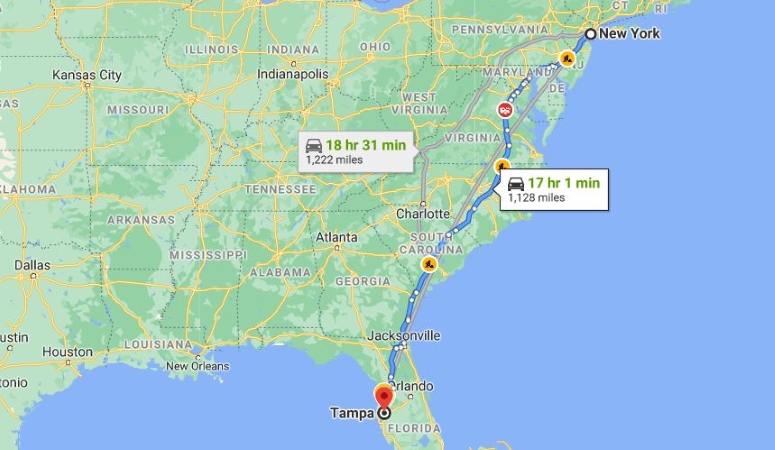
Cross-country moving costs from North to South are slightly cheaper than East to West Coast costs because of lower demand.
(Source: Google Maps)
What About Cross-Country Moving Costs From NY to Florida — or Florida to NY?
Sure, it’s not unheard of to move from the South to the North, whether it’s for a job, to be close to family, or thanks to the allure of NYC itself. In fact, it typically costs a bit less — usually a few hundred dollars difference — because of the lower demand. (Keep this in mind if you’re trying to negotiate long-distance moving costs for this type of move.) But considering the difference in weather, it’s no surprise that more people generally make the move from the Northeast to Florida.
So, how much does it cost to move cross-country if you’re going North to South rather than coast-to-coast? Estimates for moving a moderately furnished two-bedroom household 1,000 or so miles from NYC to Orlando, Florida, for example, average about $3,500 for full-service movers, $1,100 with a rental truck, and $4,700 with a PODS moving and storage container. Here’s a table for easy reference for moving from NYC to Florida’s three top metro areas: Orlando, Miami, and Tampa.
Moving Costs From NYC to Florida*
NYC to Orlando
- Miles: 1,080
- PODS (includes transport and 1-month storage): $3,442 – $5,277
- Full-Service Movers (includes transport and loading/unloading): $2,190 – $5,100
- Rental Truck (plus fuel costs): $740 – $1,640
NYC to Miami
- Miles: 1,280
- PODS (includes transport and 1-month storage): $3,467 – $5,315
- Full-Service Movers (includes transport and loading/unloading): $2,482 – $5,433
- Rental Truck (plus fuel costs): $896 – $1,738
NYC to Tampa
- Miles: 1,130
- PODS (includes transport and 1-month storage): $3,437 – $5,269
- Full-Service Movers (includes transport and loading/unloading): $2,203 – $5,318
- Rental Truck (plus fuel costs): $750 – $1,603
*Based on estimates from PODS and MoveBuddha for a 2-3 bedroom household (800-1,200 sf) as of December 2025. Costs don’t include insurance or taxes. Prices will vary based on specific locations, dates, size of household to be moved, and available discounts. For a detailed quote, call PODS at 877-350-7637.
What About Moving Costs for 100 to 500 Miles?
What if you’re just moving 100 to 500 miles to another city in your state or to a city in a nearby state? While it’s a much shorter distance than cross-country, 100 to 500 miles is still a lot harder to do yourself than a local move. Long-distance moving costs require some careful budgeting in terms of time and money. Factoring in the time — and energy — it takes to load, drive, and then unload your stuff, you’ll want to give yourself at least two days to make the move.
Moving Costs for Popular Moving Routes*
Richmond to D.C.
- Miles: 1,080
- PODS (includes transport and 1-month storage): $3,442 – $5,277
- Full-Service Movers (includes transport and loading/unloading): $2,190 – $5,100
- Rental Truck (plus fuel costs): $740 – $1,640
Austin to Dallas
- Miles: 1,280
- PODS (includes transport and 1-month storage): $3,467 – $5,315
- Full-Service Movers (includes transport and loading/unloading): $2,482 – $5,433
- Rental Truck (plus fuel costs): $896 – $1,738
L.A. to Phoenix
- Miles: 1,130
- PODS (includes transport and 1-month storage): $3,437 – $5,269
- Full-Service Movers (includes transport and loading/unloading): $2,203 – $5,318
- Rental Truck (plus fuel costs): $750 – $1,603
*Based on estimates from PODS and MoveBuddha for a 2-3 bedroom household (800-1,200 sf) as of December 2025. Costs don’t include insurance or taxes. Prices will vary based on specific locations, dates, size of household to be moved, and available discounts. For a detailed quote, call PODS at 877-350-7637.
L.A. to Phoenix
Miles: 1,130
PODS (includes transport and 1-month storage): $3,437 – $5,269
Full-Service Movers (includes transport and loading/unloading): $2,203 – $5,318
Rental Truck (plus fuel costs): $750 – $1,603
| Moving Route | Miles | PODS (includes transport and 1-month storage) | Full-Service Movers (includes transport and loading/unloading) | Rental Truck (plus fuel costs) |
| Richmond to D.C. | 110 | $773 - $1,186 | $1,231 – $3,795 | $132 – $239 |
| Austin to Dallas | 200 | $941 - $1,442 | $1,659 – $5,037 | $277 – $539 |
| L.A. to Phoenix | 370 | $2,584 - $3,962 | $2,184 – $6,058 | $447 – $964 |
| Tampa to Atlanta | 460 | $1,521 - $2,332 | $2,071 – $5,336 | $533 – $1,116 |

Moving long-distance (generally considered anything more than 400 miles) requires careful planning and preparation — and good organizational skills — to keep your cross-country moving costs down.
What Factors Affect Long-Distance and Cross-Country Moving Costs?
Moving distance and household size are the two major factors that impact your moving costs, but there are other variables when you’re budgeting for your move. You’ll want to consider all the factors — plus how they affect both your costs and plans — when choosing between traditional movers, rental trucks, or portable containers.
Moving Distance
How many miles are you moving between your current home and your new address? Using PODS to move cross-country could be an option that balances your budget and schedule. PODS moving costs tend to be competitively priced for the value you receive.
Household Size
How much stuff are you moving? Traditional movers estimate your cross-country moving costs based on the weight of your belongings, which can vary from the estimate to the final bill. Portable container and rental truck pricing is based on the container or truck size. Smaller households may be less expensive, so there is a lower cost to move a one-bedroom apartment cross-country.
Driving
The longer the distance, the more stressful it is to drive a huge rental truck — and park it multiple times. You can skip the truck-driving chore by hiring traditional movers or a portable container service. When you factor in fuel costs to fill up a big rental truck, a portable container can be very close in price, and even more affordable if you need storage or would have to pay to transport your own vehicle.
Labor
Professional movers load and unload all your furniture, boxes, and other stuff, but they’ll charge extra for packing and unpacking. With rental trucks and portable containers, you can hire packing and loading assistance. This means you only pay for the services you really need — which is helpful when you’re tallying up long-distance moving costs.
Scheduling
If you need to change moving dates, traditional movers may charge hefty rescheduling fees, as high as $500 or more. Truck rentals are easier to change, but they also charge late fees. This is where you might need a cross-country moving checklist. If you need flexibility, ask about this upfront, or use a portable container service like PODS, which adds no extra charge when you give notice of a change up to three days before delivery or pickup. The built-in storage of portable containers also provides an easy buffer for postponed home closings and other unexpected delays.
Storage
Will you need storage as part of your move? Besides needing scheduling flexibility, many people moving cross-country or long-distance prefer to stay in a temporary home while they take time getting to know a new area. That’s when portable containers come in handy. If you’re using traditional movers and you think you may need storage, be sure to ask about the costs and conditions. If you’re renting a truck in this scenario, you’ll have to pay for self-storage and probably for another truck rental — not to mention deal with an extra round of loading and unloading.
Season and Timing
The time of year you’re moving will likely affect your cross-country moving costs. Moving estimates are highest during the busy season, which is generally May through September. November and December tend to be the slowest months for moving and, therefore, the cheapest to move cross-country. Another way to save on cross-country moving costs is to move during the week (versus the weekend). That way, you may get a slightly better rate from a traditional mover or rental truck company.
Moving Supplies
The cost of the best moving boxes, packing materials, moving blankets, and other supplies can add up, ranging from about $50 to upwards of $300. Traditional movers will typically include moving blankets and shrink wrap to protect your furniture as part of their quote, but you’ll need to purchase boxes and other supplies if you do your own packing.
| Need moving boxes? PODS has you covered with moving kits at Home Depot — tailored to your container size! |
Fuel
There are generally no added fuel charges with traditional movers or portable containers. However, this can be a major expense with a rental truck, especially if you’re driving 2,800 miles across the country. And don’t forget about the fuel surcharge penalty if you don’t return the vehicle with a full tank.
Moving Insurance
Check your homeowner’s or renter’s policy to make sure it includes protection for your belongings during a move. If not, getting insurance against damage or accidents along the way is highly recommended for long-distance moves, and these costs should be factored in. See our moving insurance guide for advice on what to cover.
Hotels and Food
Besides getting your stuff moved, you and your family will need to make the trip, too. Here are some tips on how to cut costs while moving, including your costs on the road.
| Q: How hard is it to move across the country? A: Cross-country moving is an enormous undertaking for most people and requires planning and budgeting. Still, with the right prep, a cross-country move doesn’t have to be torture. And cross-country moving costs don’t have to break the bank. Use our guides and checklists to manage all the details, and you’ll make the move to your new home with minimal stress — and maybe even some great road-trip memories. |
Why Is Cross-Country Moving So Expensive?
Cross-country moving costs are typically expensive because of the time and effort required to move a home’s belongings long-distance. Additionally, over the past few years, the cost of moving cross-country has increased, something homeowners and renters need to take into consideration when planning a move.
There are a variety of supply-and-demand issues causing cross-country moving costs to increase, including the cost of gasoline and the shortage of truck drivers at some of the major moving companies. Another industry issue is the Electronic Logging Device rule for all truckers, established by the U.S. Department of Transportation, which restricts how many hours a truck driver can work.
Further cost crunches have come from the rising cost of vehicles. Although car prices are predicted to soften in 2025, the average purchase price for a new car has risen by $11,000 in the past five years.
| Q: How can I save money on moving costs? A: Every little bit of savings helps during a cross-country move, right? So consider some of these money-saving tips: 1. Negotiate with the moving company for the best price and compare multiple quotes. 2. Move during the off-season, like late September through April. 3. Declutter, donate, and discard. Don’t pack unwanted items. 4. Labor is expensive. Call on family and friends to help. 5. Ask for discounts, like military, first responder, or senior citizens. |
So How Much Should You Budget for Cross-Country Moving Costs?
Well, so far, you’ve seen how wide the cost to move cross-country can range, but for general planning purposes, the average cost of moving cross-country sits between $2,000 and $10,000.
Now that we’ve covered the cross-country moving costs factors, here’s a look at how each moving method works, including pros and cons.

If you go with a full-service mover, do your due diligence: Check references and online reviews, and read all the fine print on your contract.
Traditional Moving Companies
If money is no object and you have no worries about scheduling or storage needs, full-service movers are the most hands-free approach to moving — especially if you pay them to do all the packing and unpacking. Just don’t expect it to be hassle-free. Most require a personal or virtual walk through your home before giving you an estimate on your cost to move cross-country.
On moving day, you need to be organized and well prepared when the movers arrive like a small army to collect your belongings. Be sure to work with a reputable mover — do research to find the best cross-country moving companies — and watch out for scams, where they bid extra low and then change the price once they have your stuff. Check their licensing, insurance, and references, as well as base rates and extra fees for stairs, extra-heavy furniture pieces, and other potential upcharges.
Pros and Cons of Full-Service Movers
| Pros | Cons |
| No heavy lifting | Expensive |
| No driving a huge truck | Schedules can be rigid, with extra fees for changes |
| Less hassle if you choose a good company | Higher risk of damage and loss |
| Extra services available | Potential for added fees |
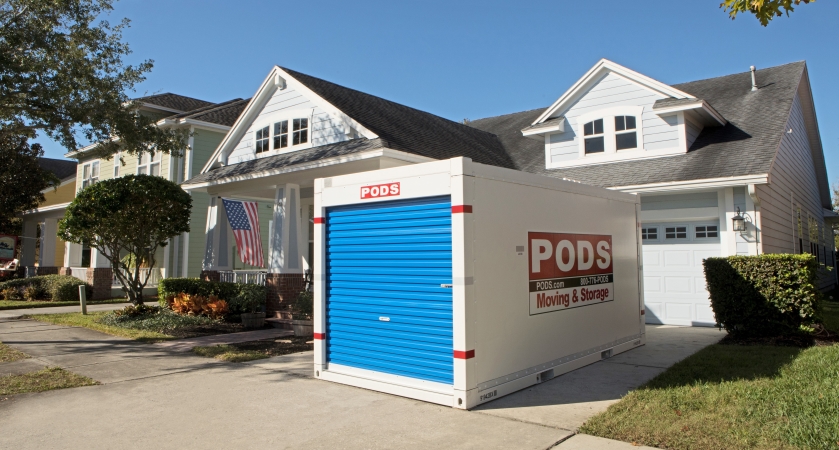
PODS containers provide the ultimate flexibility: You can pack on your schedule, have access to your belongings 24/7, and can decide when you want your container delivered to your new home.
PODS Moving and Storage Containers
You can usually save a good chunk of change by using portable containers instead of full-service movers. In fact, the cost of moving cross-country is more in the ballpark of rental trucks — except you don’t have to drive a truck!
Container moves involve a little more work on your part than hiring movers, but they can offer a lot more flexibility and control, in addition to convenient storage. For an idea of cross-country moving costs with containers, these online tools can help you decide the size and quantity of containers you need. Spoiler: Most moderately furnished 2- to 3-bedroom households will fit in one 16-foot PODS container.
Curious about PODS moving costs, specifically, if you’re headed cross-country? Getting a PODS estimate for a long-distance move is fast and easy to do. Just call 877-350-7637, tell them about your move, and they’ll put together your personalized quote (please note that you have to call for a cross-country quote).
Here’s how PODS works when you’re moving cross-country or long-distance:
- Your container is delivered to you.
- You can take your time loading (you rent your containers by the month).
- You have the option to hire hourly moving professionals to help with the heavy lifting and packing.
- Your container is picked up and transported to your new place or a secure PODS Storage Center (if you need more time before unloading).
- When you’re done unloading, your empty container is picked up.
One thing to consider when you’re moving with PODS: You’ll need a driveway, parking lot, or street parking space for your container. If you’re moving to or from a tight urban setting, like New York City or Los Angeles, you’ll want to double-check that there’s sufficient space. If your location doesn’t allow space for a container, PODS City Service, designed for urban areas, offers a solution in many areas.
Pros and Cons of Portable Containers
| Pros | Cons |
| Less expensive than full-service movers | Usually costs slightly more than rental trucks for long-distance moves |
| No driving a huge truck | Parking space required |
| Flexibility to set your own pace | You take care of your own loading and unloading |
| Option to hire hourly moving help with loading and unloading | |
| Built-in storage options |
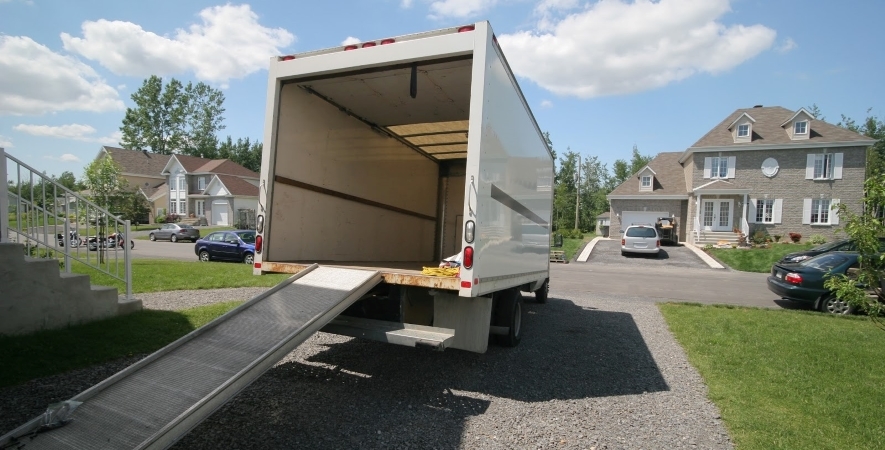
The DIY approach comes with the lowest moving cross-country cost, but if driving a big truck isn’t in your skillset, you might think twice.
Rental Trucks
Renting a truck and doing all the packing, loading, unloading, and unpacking is the total DIY approach, which can be especially hard when you’re moving long-distance or cross-country. You must pick up the truck and deliver it to the drop-off center when you arrive.
Plus, you'll be paying for any damage to the truck. This is especially pertinent when it comes to cross-country moving — we can promise you some of those old highways have seen better days. And if you've never driven a truck that large, you might be better off letting a professional take on the roads, doubly so if you're moving to a place with tight, narrow streets. So, in short, even though it seems like you’ll be saving on your moving cross-country cost at first, you could end up paying more in the long run.
Pros and Cons of Rental Trucks
| Pros | Cons |
| Can be the cheapest option for short moves | Costs run much higher for longer-distance and cross-country moves |
| Easy online pricing and reservations | Most stressful option |
| You set the schedule | Driving and parking a huge truck |
| Wide availability | No storage available |
| Q: How much does it cost to move cross-country? A: The average cost to move cross-country will be between $2,000 and $10,000, depending on which option you choose — the DIY approach, full-service movers, or a container service like PODS. |

Long-distance moves are a massive undertaking, but the experience doesn’t have to be stressful and unpleasant.
(Source: Ketut Subiyanto)
Moving Forward
Whatever moving option you choose, we hope this guide has helped you find the services with the best value for your needs. Long-distance moves are a major undertaking. Here are three of our most popular moving resources from the PODS Blog to help you make yours a success:
- 12 Tips for Moving Cross-Country From Someone Who Did It
- 16 Foolproof Packing and Moving Tips and Tricks From Someone Who’s Moved 25+ Times
- Our Ultimate Moving Checklist
Liz Taylor is a freelance writer based in Tampa who enjoys getting out and exploring the Gulf Coast.

Your quote in 60 seconds
Get pricing tailored to your needs!
Related Articles


How To Move Furniture Across Country: Tips and Tricks To Get To Your Long-Distance Destination
Long-Distance Moves
Read more